Our Mission
Brooklyn Rewilders reconnects children and communities to the living world, through ecological education in schools and native food hedges on Brooklyn's fence lines, rooted in the belief that we are not visitors to the natural world, but part of it.
-
Ecological Education That Sticks
Afterschool and in-school programs that put children in direct contact with the living world, through gardens, wild foods, native plants, soil science, and the insects, birds, and fungi that share their schoolyard. Learning that traces the relationships between living things, and lives in the hands and body, not just the head.
-
Urban Rewilding
Fences of Abundance plants native berry hedges along Brooklyn's fence lines, open to anyone who passes. Each hedge is habitat for pollinators and wildlife, a food source for neighbors, and a small repair in the relationship between the city and the living world it is built on.
-
A community of life
Our work creates places where the community includes more than people. Where children understand the web of relationships that sustains all life, where generations learn alongside each other, and where humans and the rest of the living world find their way back to reciprocity: the exchange of care that everything alive depends on.
Our Values
WILD - Living with Loving Respect
We honor the earth and all its ecosystems, approaching nature with reverence and care. Being wild means living authentically, with deep respect for the interconnected web of life that sustains us all.
Joy
Joy is our foundation, the energy that transforms learning into something unforgettable. Through laughter, play, and genuine enthusiasm, we create experiences where children's natural exuberance meets the wild world, sparking connections that last a lifetime.
Curiosity
We nurture the wonder that drives all learning. Through asking questions, exploring mysteries, and approaching the unknown with open minds, we discover the incredible complexity and beauty of the natural world.
Compassionate Community
True rewilding happens together. Through shared learning, mutual support, and kindness to all living beings, we build connections that strengthen both our human bonds and our relationship with the natural world.
Self-Reliance
Like wild plants pushing through city sidewalks, we develop the independence, confidence, and practical capabilities that come from mastering real knowledge: growing food, understanding natural cycles, trusting your own hands. We want children to carry that confidence into everything they do.
Mindfulness
We practice deep attention to the present moment, observing the subtle rhythms of nature and our inner landscapes with curiosity and care.
Imagination
We celebrate the creative spirit that finds new solutions, expresses wonder through art and play, and reimagines how humans can live in relationship with the rest of the living world.
Reciprocity
Reciprocity is the heartbeat of all healthy relationships, with nature, with each other, and with ourselves. We practice the exchange of giving and receiving, understanding that true abundance flows when we tend the world that tends us. It is at the heart of our Fences of Abundance program: neighbors tend native plants, and the plants feed the neighborhood in return.
WHY THIS WORK MATTERS

Most children growing up in Brooklyn today have little unstructured time outdoors. They know more about the digital world than the living one outside their windows. The gap between human communities and natural systems has never been wider, and the costs show up in children's bodies, attention, and sense of what is possible.
Children spend an average of 7 hours a day on screens and less than one hour outdoors (American Academy of Pediatrics). Only 6% of children aged 9-13 play outside independently each week (Children & Nature Network). And in Brooklyn, fewer than 40% of elementary schools have any outdoor learning space (NYC School Construction Authority).
At the same time, research consistently shows that time in nature reduces anxiety, improves attention, and gives children a felt sense of belonging to something larger than themselves. Children with regular nature contact show stronger emotional resilience and a greater sense of agency in the world around them.
We believe the city has more room for wildness than people imagine. And children who discover that will grow into people who make different choices, better choices, choices rooted in relationship rather than extraction.
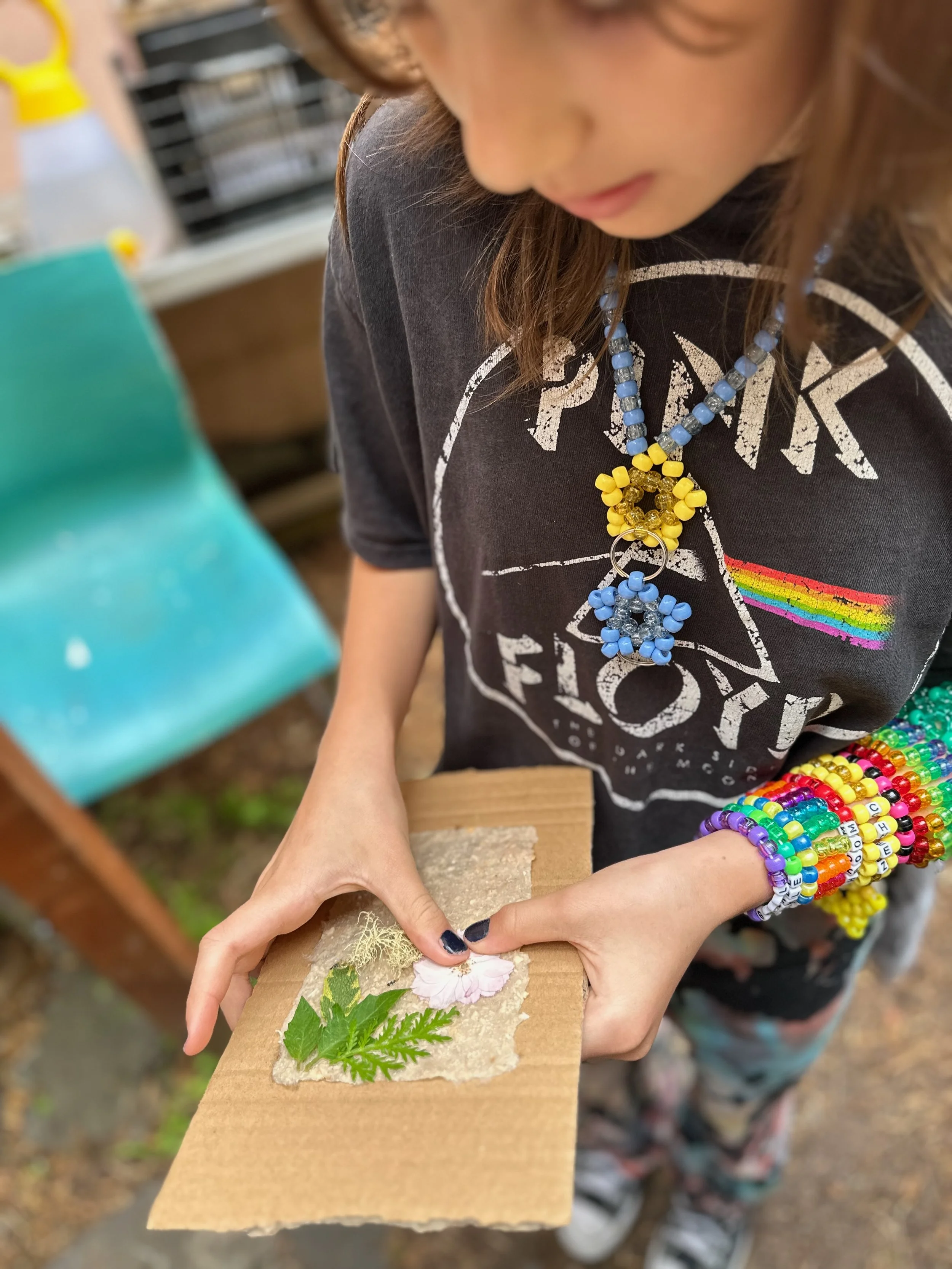
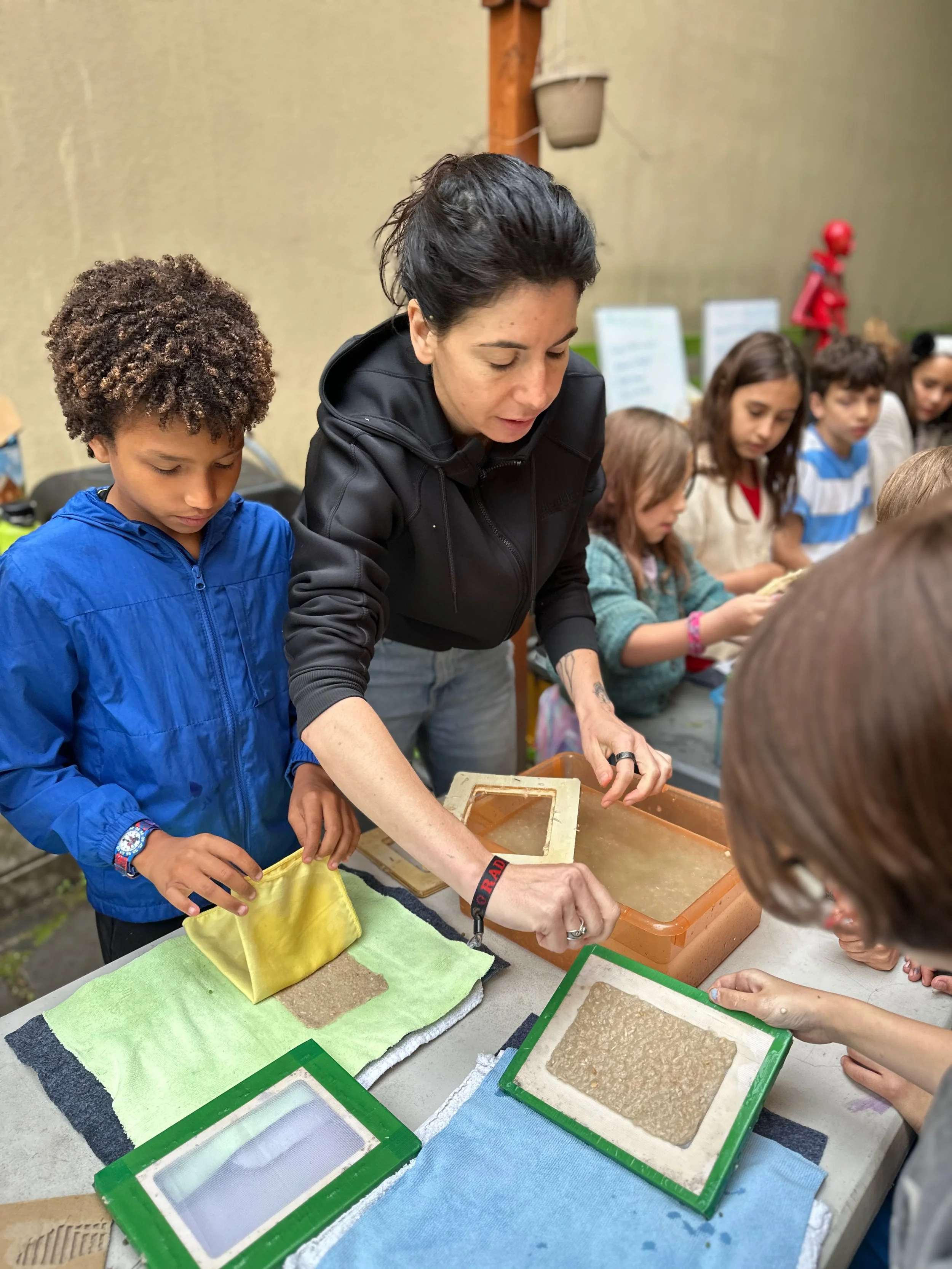
Making paper out of edible wild mushrooms with mushroom artist Roberta.
What happens if…
We reconnect to nature.
ACADEMIC IMPACT
Students in schools with outdoor learning programs show 27% improvement in standardized test scores (American Institutes for Research, 2005)
Nature-based learning increases engagement and retention by up to 95% (Environmental Education Association)
STEM achievement gaps persist in schools lacking hands-on environmental education
HEALTH & DEVELOPMENT CRISIS
Children with nature exposure show reduced ADHD symptoms (Kuo & Taylor, 2004)
Regular nature contact can reduce childhood obesity rates by 50% (Bell et al., 2008)
Mental health issues increase as outdoor time decreases (Louv, 2008)
ENVIRONMENTAL JUSTICE
Brooklyn's most underserved communities have the least access to quality environmental education
Climate change will disproportionately impact these same communities
Without ecological literacy, children cannot become environmental advocates for their neighborhoods

our solution
Hands-on ecological education that connects children to the natural world through:
In-school enrichment programs - native plant gardens, habitat building, pollinator studies, ecological science grounded in self-reliance and reciprocity
After-school programs - Cooking, gardening, STEM exploration, journalism, theater, arts integration
Farm field trips - Real-world connections to food systems and agriculture
Teacher training - Building capacity for nature-based, practical learning
why rewild?
Rewilding means restoring natural ecosystems AND our human connection to them.
Beyond Traditional Environmental Education
Traditional Approach:
Classroom walls separate children from nature
Abstract concepts without lived experience
Learning about the environment instead of with it
Knowledge stays in the head, not the heart, and is easily forgotten
Brooklyn Rewilders Approach:
Joy-driven immersive outdoor experiences that spark wonder
Curiosity-led hands-on discovery in real urban ecosystems
Reciprocal relationships with living systems—we learn from nature while caring for it
Building self-reliant skills through direct practice with wild foods, natural materials, and seasonal rhythms
Developing ecological intuition through mindful observation and embodied learning
Creating community connections between children, families, and the natural world
our programs
Three Pillars of Engagement
🌱 IN-SCHOOL ENRICHMENT
Native plant school gardens
Pollinator habitat creation
Ecological science curriculum
Cross-curricular integration
Serving 100 - 600+ students per school
🍂 AFTER-SCHOOL PROGRAMS
Cooking with garden harvest
STEM through nature exploration
Arts and ecology integration
Community building
12 students per class
🚜 FARM CONNECTIONS
Local farm field trips
Food & fiber system education
Regenerative agricultural practices
Seed-to-table, field-to-fashion, and natural dyeing and crafting experiences
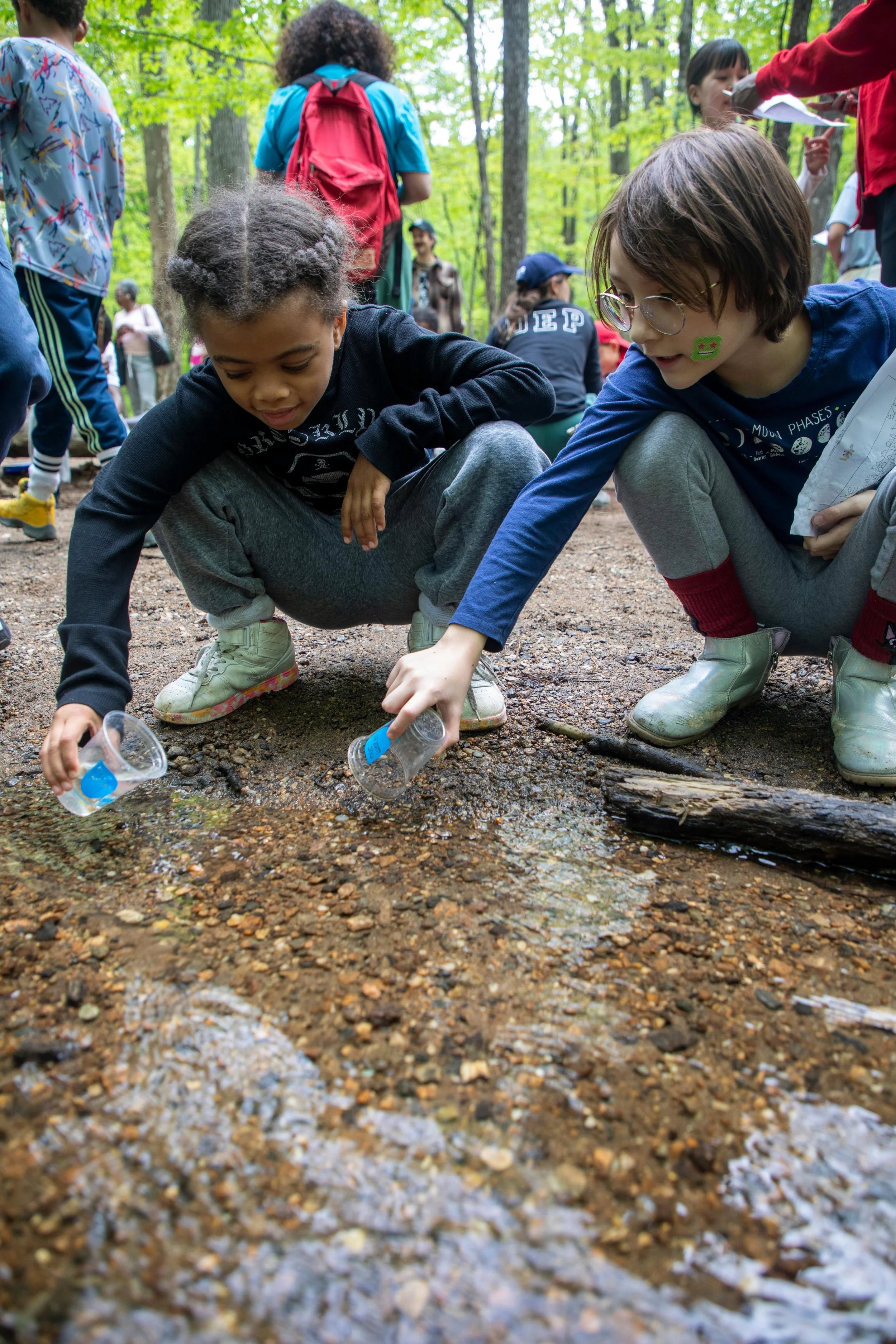
Our Arts & Letters United students releasing trout at the Ward Pound Ridge Reservation.
the brooklyn rewilders experience
What Makes Us Different
🔬 STEM Integration
Real scientific observation
Data collection and analysis
Understanding ecological relationships
Problem-solving through nature
🎨 Creative Expression
Nature-inspired art projects
Storytelling and writing
Photography and documentation
Cultural connections to land
👨🍳 Culinary Education
Garden-to-table cooking
Nutrition education
Food preservation techniques
Cultural food traditions
Guest instruction from famous chefs, farmers, and food entrepreneurs
🌍 Systems Thinking
Understanding interconnectedness
Climate change education
Sustainability practices
Community resilience
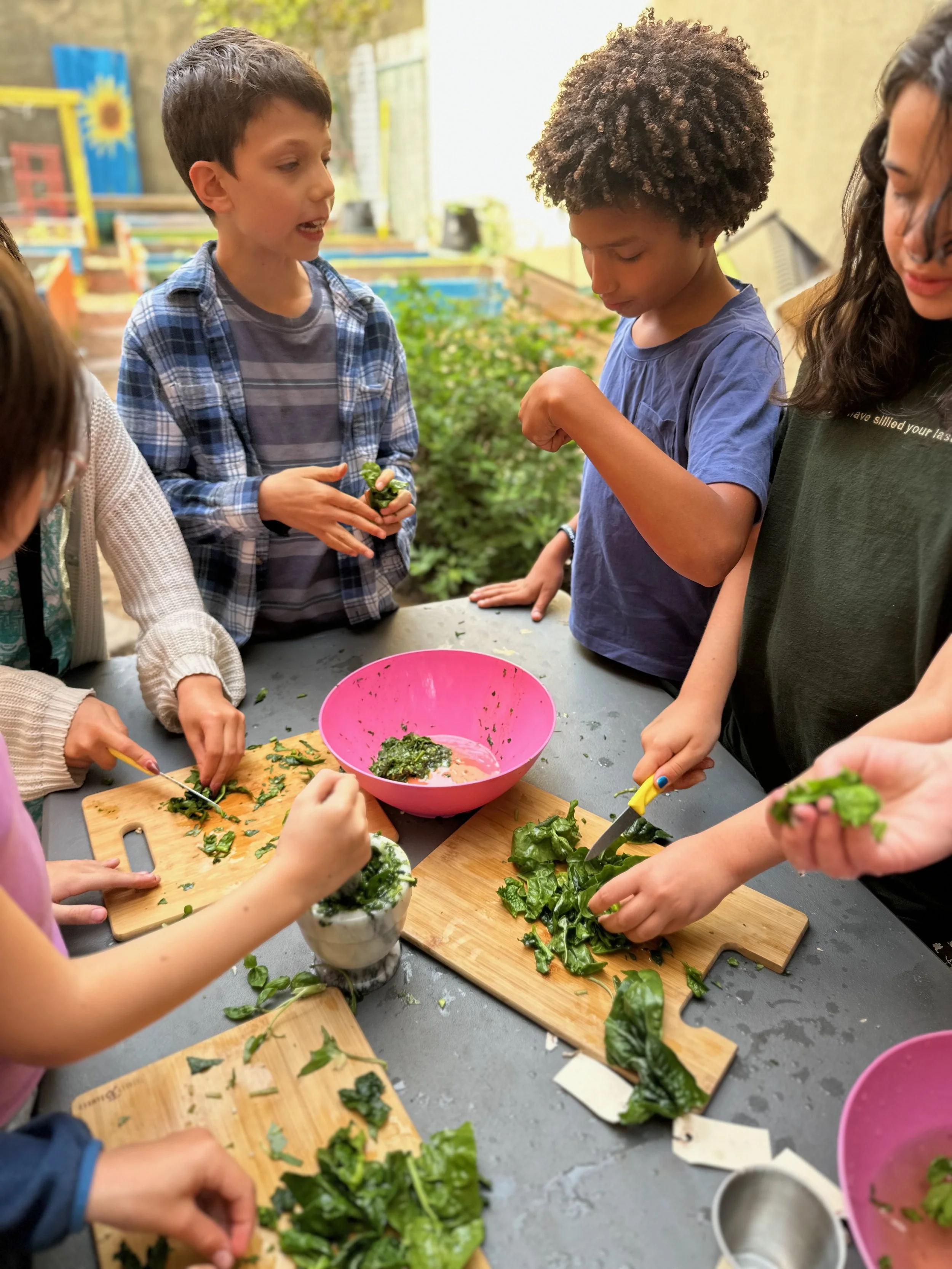
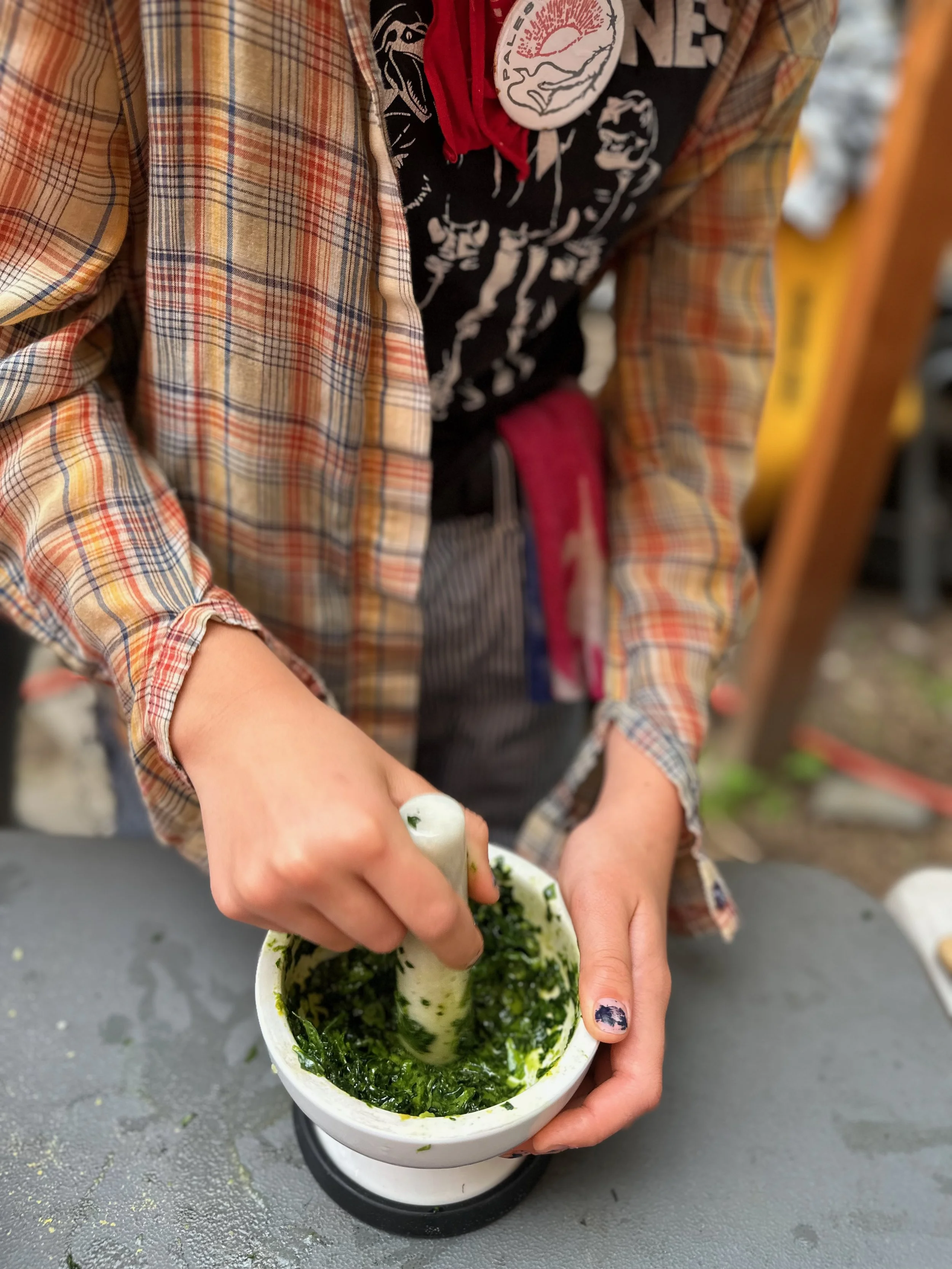
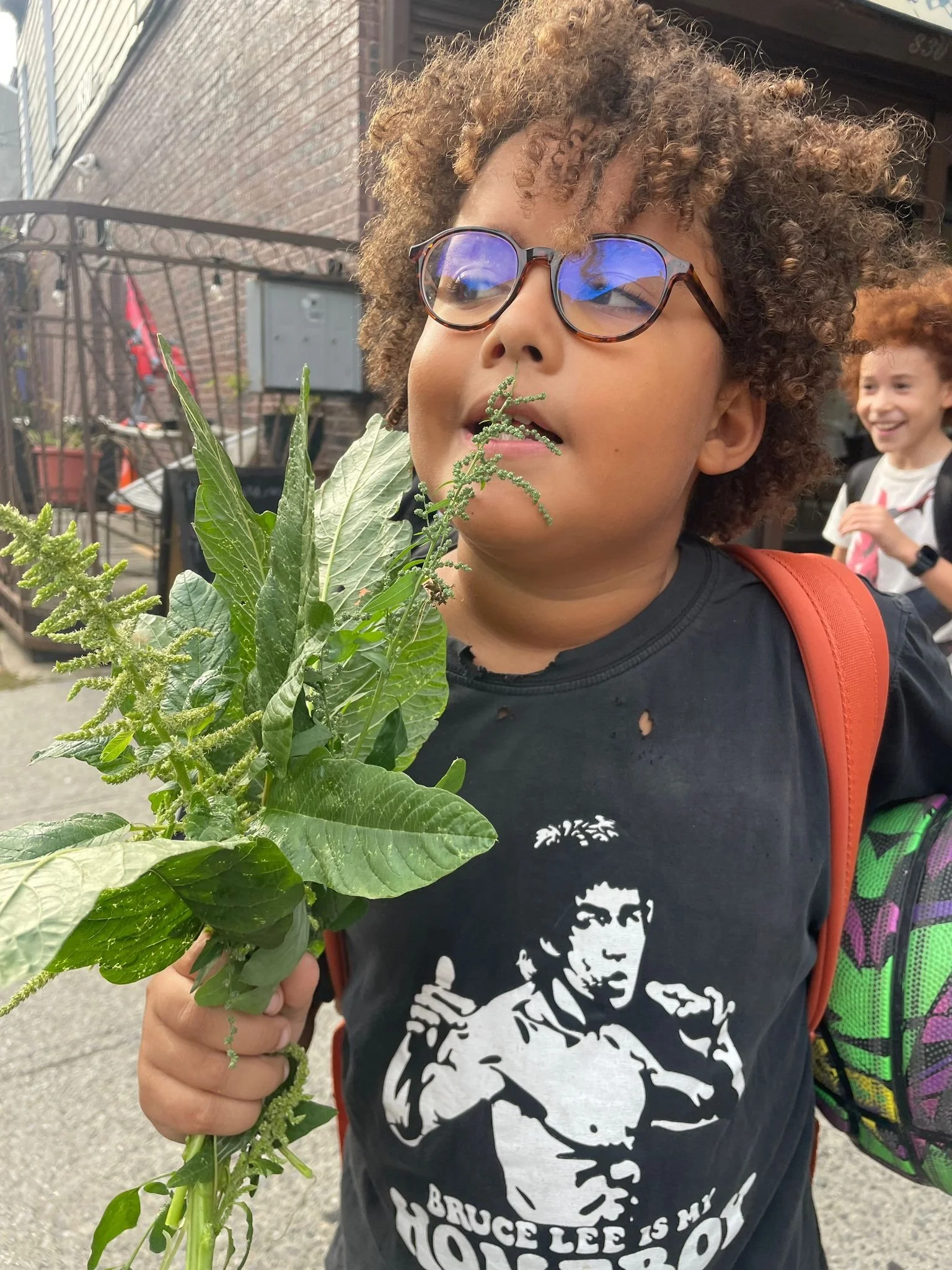
Making vegan, nut-free pesto with lamb’s quarter and amaranth greens in the Stars of Hope Community Garden in Bed-Stuy, Brooklyn.
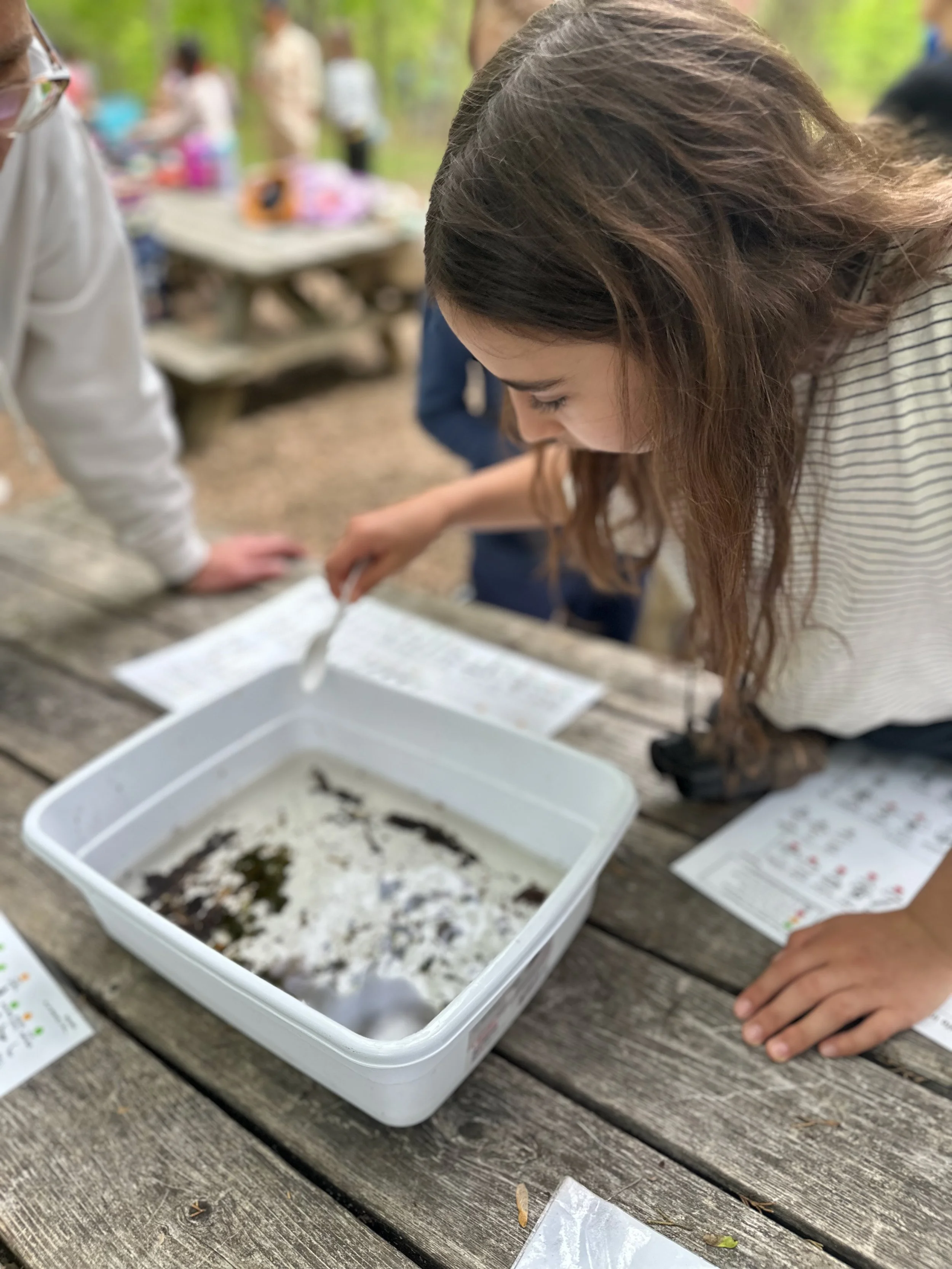
Studying water insects and larvae.
our impact model
Addressing Critical Gaps
Today's children face unprecedented challenges: 40% report chronic anxiety, 60% lack basic practical skills like cooking or problem-solving, and average screen time exceeds 7 hours daily. Traditional education fails to build the self-reliance, resilience, and real-world competence children need to thrive in an uncertain future.
IMMEDIATE IMPACT (Within 6 months)
75% of children identify 10+ local edible/medicinal plants and confidently forage with supervision
Students show 40% improvement in science engagement and 30% reduction in anxiety symptoms through hands-on ecological learning and outdoor time
Children demonstrate mastery of 5+ practical skills: fire-building, basic cooking, plant identification, natural crafts, weather reading—building confidence and self-efficacy
90% of families report stronger parent-child bonds and improved child emotional regulation through shared nature experiences
LONG-TERM OUTCOMES (1-3 years)
Youth become community educators, leading neighborhood nature walks and teaching younger children wild skills
Students make autonomous healthy choices: choosing whole foods, spending time outdoors, reducing screen time by 30% and reported stress levels by 25%
Children demonstrate systems thinking and increased emotional resilience by explaining local food webs, seasonal cycles, and their own role in natural systems
80% of program alumni take leadership roles in school environmental clubs, community gardens, or climate action groups
COMMUNITY RIPPLE EFFECTS (3-5 years)
Families transform daily practices: 60% start home composting, 40% grow some of their own food, families spend 25% more time in local parks
Schools integrate nature-based learning: partnering teachers report increased outdoor classroom time and cross-curricular nature connections
Neighborhoods see ecological restoration: student-initiated projects create pollinator gardens, remove invasive species, establish community food forests
Youth advocate for policy change: graduates testify at city council meetings, organize climate strikes, lead campaigns for green schoolyards and urban rewilding initiatives
Measured Through:
Direct observation • Family surveys • Academic performance tracking • Community project documentation • Youth leadership roles • Policy engagement records
target communities
THE DIVERSE DIASPORA of Brooklyn
PRIMARY FOCUS:
Elementary and middle schools in Brooklyn
Communities with limited green space
Areas with high environmental justice concerns
Schools lacking outdoor education resources
PARTNERSHIP SCHOOLS:
PS 9 (Prospect Heights)
Arts & Letters United (Bedford-Stuyvesant)
PS 282 (Park Slope)
Expanding to 5 additional schools, Years 1-3
COMMUNITY CENTERS:
After-school programs
Community gardens partnerships
Local farm collaborations
Potential Partnership opportunities
Building the Rewilding Movement
SCHOOL DISTRICT PARTNERSHIPS
Curriculum integration support
Professional development programs
Sustainability policy development
UNIVERSITY COLLABORATIONS
Research partnerships
Student teacher placements
Program evaluation support
COMMUNITY ORGANIZATIONS
CORPORATE PARTNERSHIPS
